
Arrest Warrants in Gloucester County
Two statutes do the heavy lifting in Virginia. Code §§19.2-71 and 19.2-72 lay out who may issue criminal process and how a complaint gets sworn. A Gloucester County complaint starts with facts stated under oath. From there, a judge, clerk, or magistrate weighs whether probable cause supports the paper being requested. That standard is a screening tool, nothing more. Felony indictments travel a different road: Circuit Court issues capias process under state law. Other complaints begin with a magistrate and later land in GDC, Circuit Court, or JDR, depending on the charge. The case paper itself names the court to contact, so read it closely.
Gloucester County Arrest Warrant Issuance
Virginia's DC-311 criminal complaint form shows what goes into the process: the court and locality, the accused's identifiers, the date and place of the offense, the factual allegations, the complainant's oath, and the authorization fields. Think of it as the template, not the warrant. The Virginia district criminal forms index links the official versions. A filled-out form alone proves nothing about Gloucester County issuance. Only the court's or magistrate's action on it controls, and a Gloucester arrest warrant exists only once that step is taken.
What a Gloucester County Arrest Warrant Contains
Official forms list the usual fields, though public display can leave out protected or investigative details. Gloucester County publishes no sample warrant showing a local numbering pattern. Read the court, process type, charge, and case number first. Then ask the clerk whether the record carries a public return or a later order.
| Warrant / case number | Schema only No public Gloucester format was inspected. |
|---|---|
| Named subject | Name and identifying description; juvenile information may be protected. |
| Charge / offense | Offense and event details connected to the complaint. |
| Issuing authority | Judge, authorized clerk, or magistrate, with the court or locality. |
| Bond / release | May show a bond type or conditions after judicial review; no county schedule is published. |
| Issue / return | Date, service, return, or next hearing may be held in separate records. |
Gloucester County Arrest Record Access
One event can live in several records. Issuance, service, and case status are often split across offices: the clerk holds the court docket, a magistrate may keep issuance or bail details, and the sheriff may have a service return or incident record. Gloucester County cases can also show up partly in OCIS, the courts' online system. No single screen guarantees every event. Sealed, juvenile, and investigative material may be restricted by law, and a blank DC-311 form is never a real warrant record. So work backward from the office that holds the actual record, and ask that office what may be inspected.
How Gloucester County Arrest Warrants Are Served
The Gloucester Sheriff's Office is the county's primary law-enforcement agency. Its public pages describe deputies serving warrants day to day, with special operations handling high-risk service. Virginia law also lets authorized officers execute process outside the issuing locality, and anyone arrested that way must be brought before a judicial officer promptly. What follows service varies: intake, magistrate review, a bail decision, release conditions, or continued custody. The Sheriff's 2022 annual report covers intake and court transportation. It offers no bond schedule and promises no release timeline. Those calls sit with the court, the magistrate, and the jail, each under its own authority in Gloucester County.
Gloucester County Arrest Warrant Service
Virginia Code §19.2-76 governs execution outside the issuing locality and requires prompt presentation of an arrested person to a judicial officer. A Gloucester County warrant can therefore be served anywhere in Virginia. What happens next depends on the arresting locality and the issuing court, and a case crossing state lines may involve a separate extradition procedure. Federal warrants are a different system entirely. Matters touching Gloucester County in the Eastern District of Virginia route through the Newport News Division, with dockets on PACER or RECAP and enforcement by federal authorities, not the sheriff's case search. The Eastern District of Virginia division page is the official source for courthouse information.
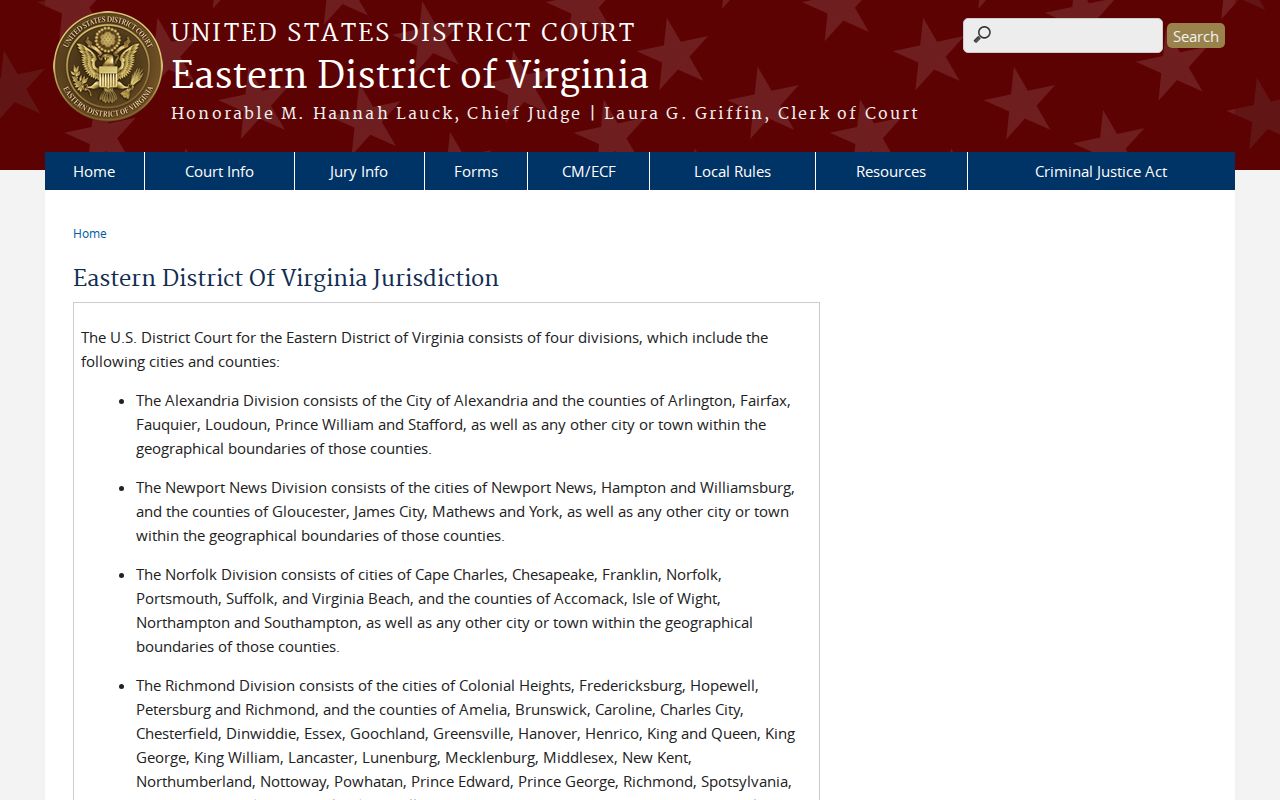
County records cannot confirm a federal warrant. PACER is a docket service, not a live warrant list.
Arrest Warrant vs Summons vs Bench Warrant
The three papers do different jobs. An arrest warrant follows probable-cause review; a summons orders a person to appear; a bench warrant or capias follows a missed court duty. People use the names loosely, but the actual court paper sets the authority and the required response. Gloucester County's bench-warrant process ties back to an existing court obligation.
| Feature | Arrest Warrant | Summons | Bench Warrant |
|---|---|---|---|
| What it orders | Arrest under the stated process | Appear at a stated time | Custody process after a court obligation |
| Basis | Complaint and probable-cause review | Case-specific court procedure | Missed appearance or noncompliance |
| Issuing route | Authorized judge, clerk, or magistrate | Court or authorized officer | Court handling the existing case |
| Response | Ask counsel and issuing court | Follow the date and instructions | Ask about recall, hearing, or surrender |
Gloucester County Warrant Service Roles
The Gloucester County Sheriff's Office handles law enforcement, court security, civil process, corrections, and warrant service. Deputies may execute an order and return service information. The court that issued the process decides whether it is recalled, continued, or satisfied, and the magistrate makes bail decisions within its own authority. The official sheriff law-enforcement page describes the local enforcement functions.
What to Do If There Is a Warrant for You
Found your name tied to a warrant? Start with the notice. It carries the court and case number, and the clerk can tell you which public procedure applies. Before you walk into any place where custody could happen, talk with a Virginia attorney about a motion to recall or quash, a bond review, or a controlled surrender. Gloucester County posts no walk-in surrender policy and runs no local online bond portal. If an officer serves the warrant, hold on to the release order, the conditions, and the next court date. A bond settles custody for now. It does not end the charge, and Gloucester County needs the court itself to move the case forward. Family can gather paperwork and reach out to counsel, yet no one clears the court's process for someone else without authority.
Important: Ask counsel or the issuing court how to appear and where to report; an informal visit to the sheriff's front desk is not a published clearance procedure.
Gloucester County Arrest Warrant Follow-Up
Serving a warrant is a single event, not the end of the case. More dates usually follow. A Gloucester County defendant may face an arraignment, a preliminary hearing, a Circuit appearance, a JDR proceeding, or new bond conditions. Before leaving custody, ask which clerk holds the file and get the written release or court order in hand. If a charge is later dismissed, expungement takes a separate petition. The warrant being served does not erase the underlying court history.